Next-Gen Learning Management
Elearnify
- Organisations served
- 3,000+
- Registered users
- 50,000+
- Courses delivered
- 2,000+
 Ruby on Rails
 React Native
 App Store
 Google Play
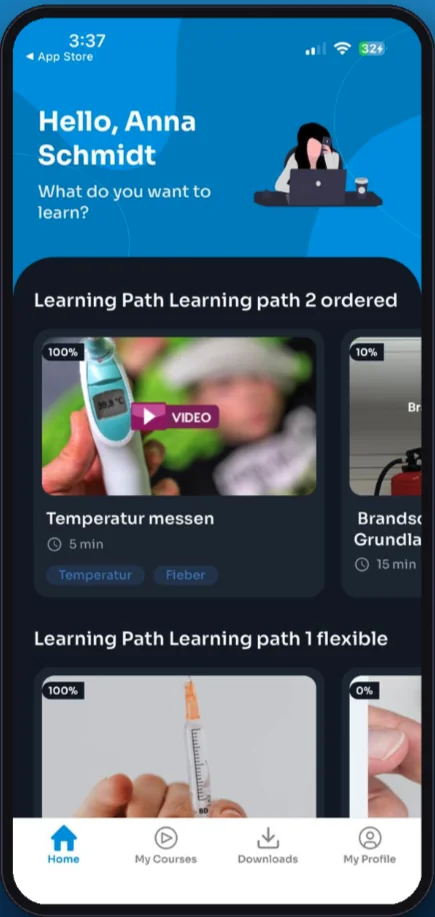
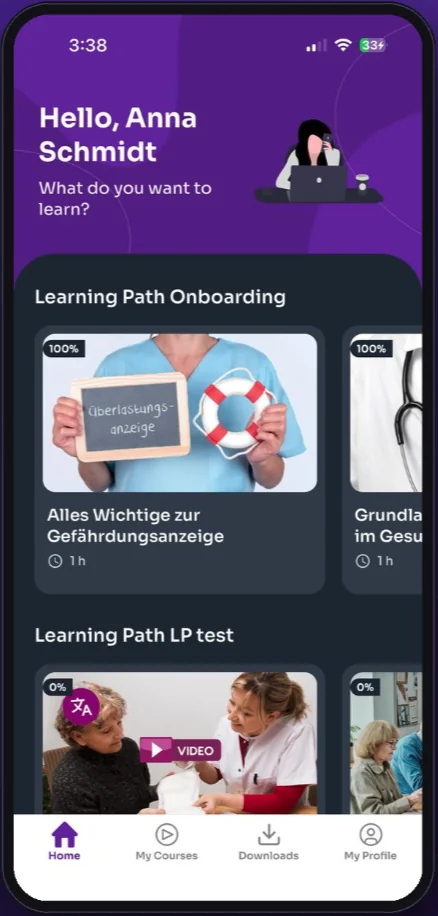
Cloudnonic builds iOS and Android apps for companies whose product has to work in the field, in a clinic or in a classroom as well as in a browser. We build in React Native and Expo, or natively in Swift and Kotlin when the product calls for it, on top of a backend we own or integrate with, so the app, the API and the infrastructure are one responsibility: one team, one release cadence, app store publishing and production support included.
Case studies in this scope. Every figure comes from the study behind it.
Ruby on RailsReact NativeApp StoreGoogle PlayMobile work is usually part of a product-team engagement, because the app is rarely the whole product: it needs an API, accounts, data and operations. For companies with an existing backend team we embed, build the app and the API changes it needs, and hand over a release process your team can run.
Your product team · What this prevents: A prototype that never becomes a platform, and a CTO hire made before the product deserves one.
The two engagement models →Chosen per project. We pick what your team can run after us, not what is fashionable.
React Native Expo
 Swift (iOS)
 Kotlin (Android)
 TypeScript
 NestJS
 PostgreSQLPostgreSQLNestJSTypeScriptKotlin (Android)Swift (iOS)ExpoReact Native
The app is designed and built against an API that does not exist yet, then waits for it, or forces a backend shape that only serves one screen.
Months of idle front-end work and an API that has to be redone for the second consumer.
App and API are scoped together and built by one team. The first weeks produce a thin end-to-end slice, not a set of screens.
Three contracts, three release calendars and nobody accountable for the bug that lives between them.
Every incident becomes a negotiation, and the client becomes the integrator.
One team owns the app, the API and the infrastructure, with one on-call rota and one release cadence.
The app ships, crashes on a device nobody tested, and there is no monitoring, no rollback and no one assigned.
One-star reviews in the first week and a product the sales team stops demoing.
Crash reporting, staged rollouts and over-the-air updates are part of the first release, and a named engineer owns the app in production.
React Native with Expo for most products: one codebase for iOS and Android, native modules where a feature requires them, and a team that also knows the backend. We go fully native, Swift on iOS and Kotlin on Android, when the product depends on platform capabilities that justify two codebases.
Yes, and we prefer to. The API, authentication, sync and push infrastructure are designed with the app and run by the same team. If you already have a backend, we embed with your team and build the changes the app needs.
We do, under your developer accounts. Store setup, review submissions, staged rollouts and over-the-air updates are part of the engagement, so a fix does not wait for a store review when it does not have to.
The same ownership as the rest of our work: crash and performance monitoring, a named engineer on call, and releases on the same cadence as the backend. Mobile is not handed over to a maintenance tier.
Every service on this page is delivered with our AI-Native process: specs as the source of truth, agents in the pipeline, and a named engineer signing off at staging.
How we build with AI →